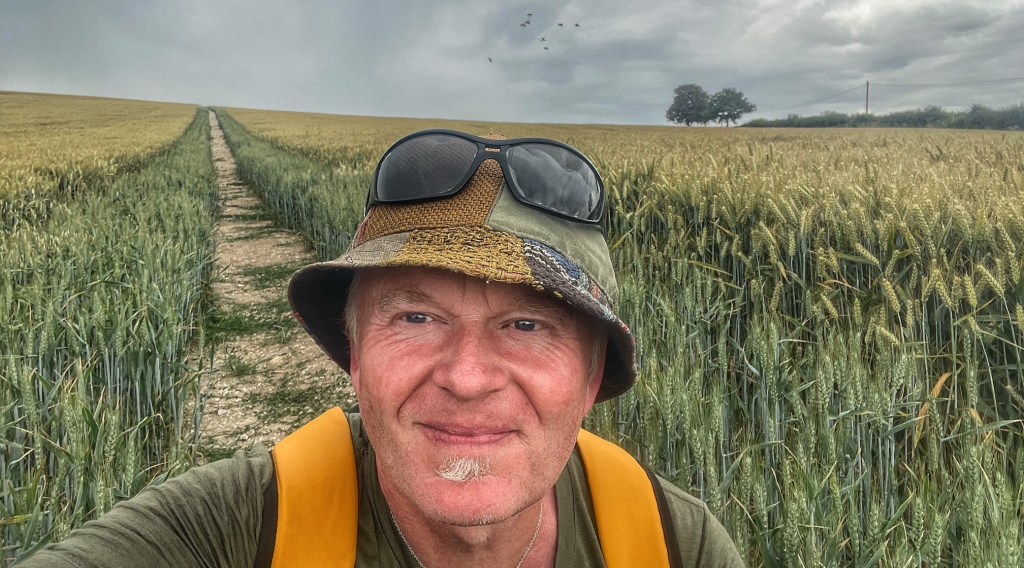
Over the past three months in the UK, many of Linda and my greatest sights, opportunities and discoveries have come from walks. On foot we’re an inhale away from fox piss, cider farms and in the towns, someone else’s ganja. We’re an ear away from barked football scores in a Mancunian accent, someone playing piano in a second floor Edinburgh apartment, and the cooing of wood pigeons fossicking amongst the badger scat and acorns. And we are a word or two away from interactions with all sorts of people, from preachers, through street sleepers, to seekers-of-redemption. To me, walking is like being submerged and soaked in a place, rather than bobbing around above it.
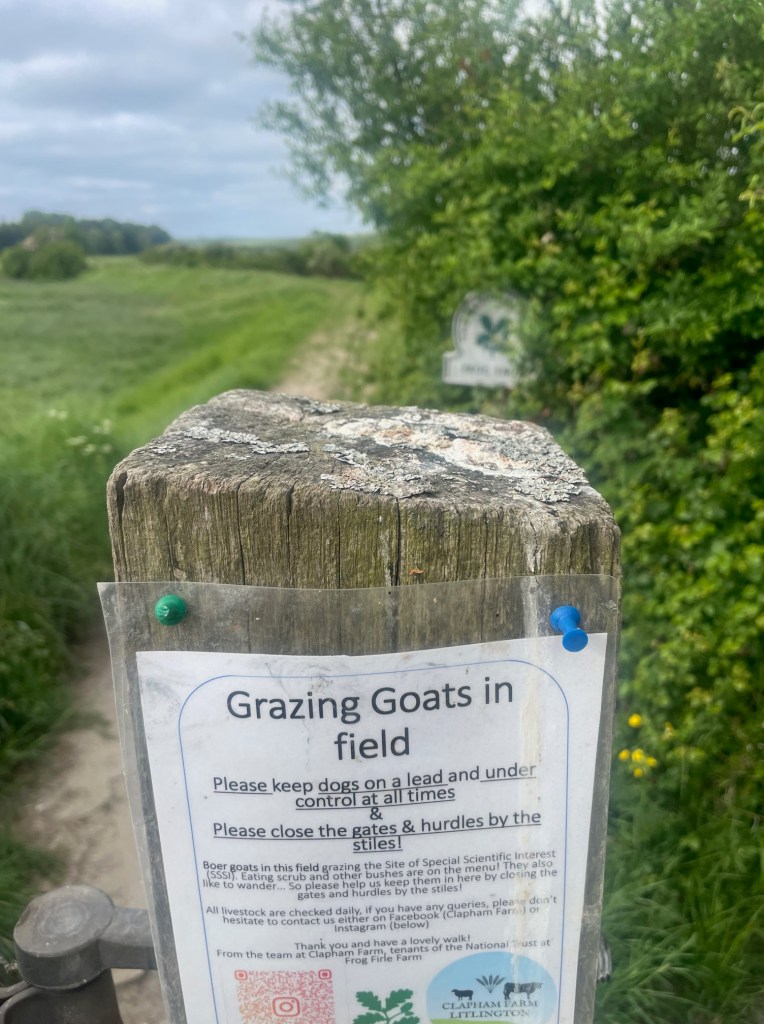
Around a week into this trip, I needed to cross a series of paddocks in a hurry. I had thirty minutes to get from my adorable cottage, across the South Downs walkway and up to a Fairy Festival, to catch a pirate folk band. As I crossed a bridge between paddocks, I noticed a sign pointing to my left, informing me of ‘Goats of Scientific Significance.’ I took a photo as a reminder, and fast-marched my way to the sea shanty mosh pit.
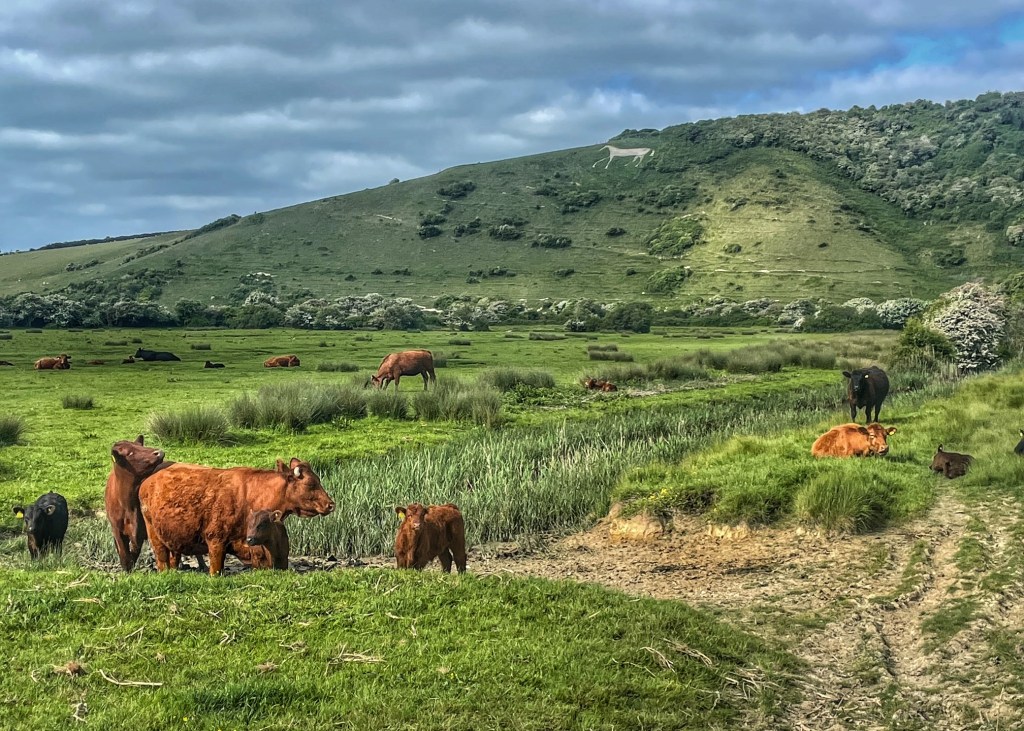
The next day, muddy headed, I decided to go goat tracking. I clambered a stile beside that warning sign, and descended into a series of dry river beds. I was keeping my eyes on the horizon, and immediately I spotted an enormous white horse carved into a hillside. As I edged between chalky rocks strewn along the dry earth valleys, I listened to a noisy set of jackdaws in a coppice of oak trees nearby. I then noticed a tall man laid out on a riverbank, his head on a hessian bag. The lanky bloke drew himself up to full height, and lumbered my way. He glanced briefly at the noise in the woods, and seemed to give a nod of his head towards them, before offering me his hand.
Paul the Preacher-man was raised in a nearby seaside town. As he turned towards the oak trees, he explained that he’d been unable to attend church over lockdown, and so he’d taken to wandering the rivers and valleys near home. Over time he found that he felt closer to his God in the outdoors, than he ever had within the chapel. His favourite spot of all, was lying beneath the trees alongside us, listening for his God in the clamorous, discordant chatter of the dark birds overtalking one another in the branches above.
Paul explained to me “I realised I went to church to express my faith. But under the trees and beside the streams, I could simply live it.” With that realisation, even after lockdown was undone, he no longer had a need for chapel or pew. He lifted his hessian bag and pulled it loose, revealing a thick, worn bible within. It was now a firm pillow for his riverside rests.
I left Paul, after agreeing to join his YouTube channel (him playing blues guitar, another lockdown discovery), and walked on to the goats, who he’d seen tucked up in a canyon. Then I lay beneath the noisy trees, and felt like I was in a story by Chaucer or Dickens, a travellers tale, with wee lessons to be learned, if I just paid attention to what I saw and heard.
Supporting walks like this, is what’s known in the UK as ‘the right to roam.’ Between the 17th and 19th centuries, a set of Parliamentary Enclosure Acts ‘fenced off’ half of England’s countryside. Since then various societies have pushed to have greater and greater access returned to the people. In 2000, The Countryside and Rights of Way Act was introduced. As a result, people like me get to follow public walkways (marked with yellow arrows) and bridleways (marked with blue), and in some areas wander anywhere we wish.
Just as importantly to Linda and my enjoyment of these walks, are the results of the old world having been walked for thousands of years, before the gradual introduction of railways and then road vehicles.
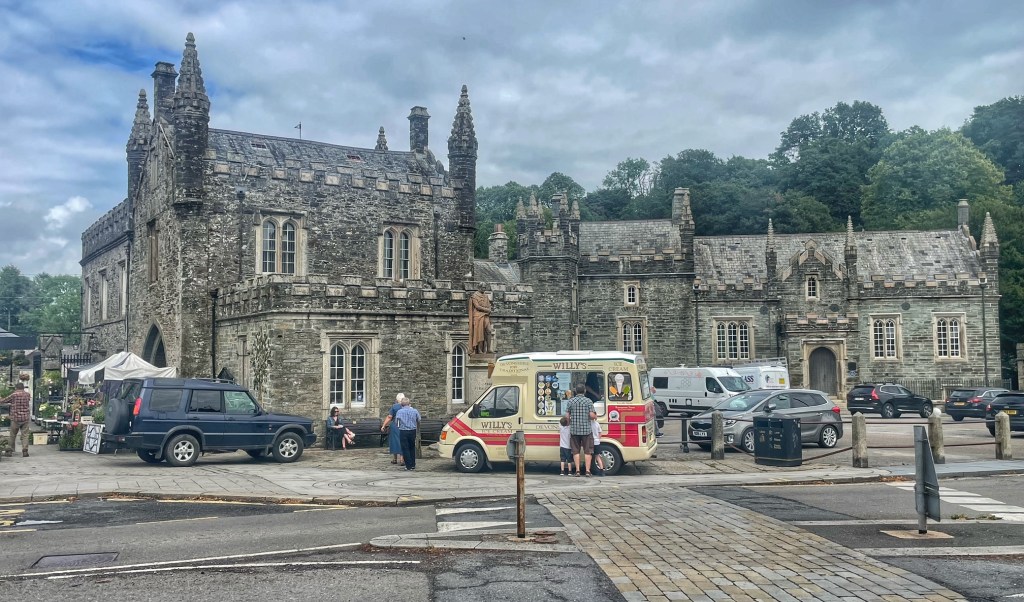
The first benefit of this, is when we walk the back lanes in the Cotswolds, there are regularly spaced bridges over rivers. There are still frequent taverns and Inns for booze, food and rest, and there are signposts indicating new trails and unexplored paths. Compared to the New World, where ancient paths were ignored by colonisers and commerce, walking still has a foothold (hahahahahaaa) in Europe. And the support structures put in place for weary travellers still provides for us a thousand years later.
The second benefit, is something which our friends Derek and Steph pointed out, before we left New Zealand. They found that in the UK, there was a far more varied set of experiences over say a four hour walk, than in walking a similar distance in Aotearoa. For me this has been true. Back home there are dramatic sights, for sure. Between them though, are wide stretches of similar sights. Thousands of years of interactions between people and their environments has resulted in a fascinating patchwork territory. One minute you’re slipping through an ancient orchard, the next you’re negotiating a ruin, then around the next corner you’re crossing a stone bridge over a canal.
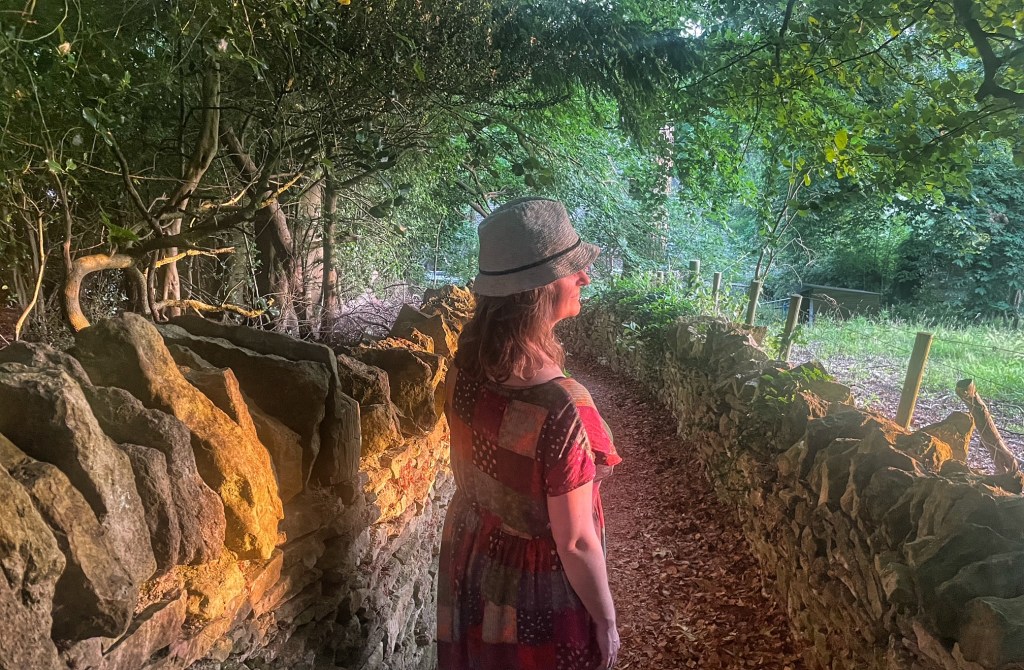
I guess another benefit of walking being granted a degree of legitimacy, is that you’re likely to meet characters along your route. While we were staying in a tiny Gloucestershire community near Nailsworth, I chose to walk a steep, crooked path down a wooded hill to the supermarket each morning. I often paused for deer or squirrels on the way down, and to catch a breath on the way up. One day though, I noticed a large man with a small backpack leaned against a gatepost. He nodded and I ‘Gidday’d’ him. The conversation that followed was centred on his return to Nailsworth to live with his Mum, and deal with his addictions.
Tim paused his explanations frequently, noting I probably had somewhere else to be, but in all honesty Linda and I have hours and hours available for chat on this trip, and he seemed relieved each time I asked an enquiring question. As is often the case, other walkers have a dozen ideas on where you might roam next, and when I eventually ambled on towards Morrisons, I had a head full of reflections, and a list of possible destinations. Alongside a new set of perspectives on living with addiction.
For me, wisdom begins when I reflect on many and varied experiences, and try to make sense of them alongside what I learn from others. Walking new paths gives me the space to reflect, new experiences to reflect on, and right now, new people to share my ideas and stories with. Now it’s up to me to draw what I can from all of this, and use it to help me live with grace, approach others with curiosity, and approach as many days as possible with a sense of fun, and expectation of adventure.


 The Wayfaring Path
Leave a comment