PastPresent
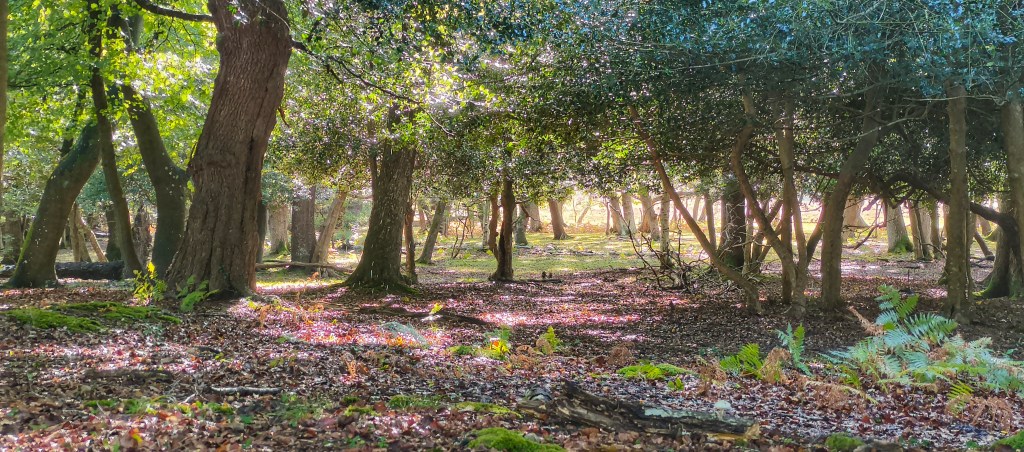
Linda talked with me recently, about how different it feels to spend time in an ancient site or building, if it’s still being used. If she’s in a Castle still inhabited by a family, it feels somehow more alive, it’s easier to form a connection with it. We’ve definitely noticed this with Cathedrals and churches, the ones with cafes, which regularly host community groups, and which engage with ancient trades like stone masonry, are definitely more welcoming (and less haunting) spaces. I’ve been thinking about this in relation to the woodlands and forests I’ve been hanging out in.
Musical note: PastPresent is the name of Irish folk band Clannad’s 1989 compilation album, 15 tracks which play inside my head while I’m creeping under oak and stepping over brambles.
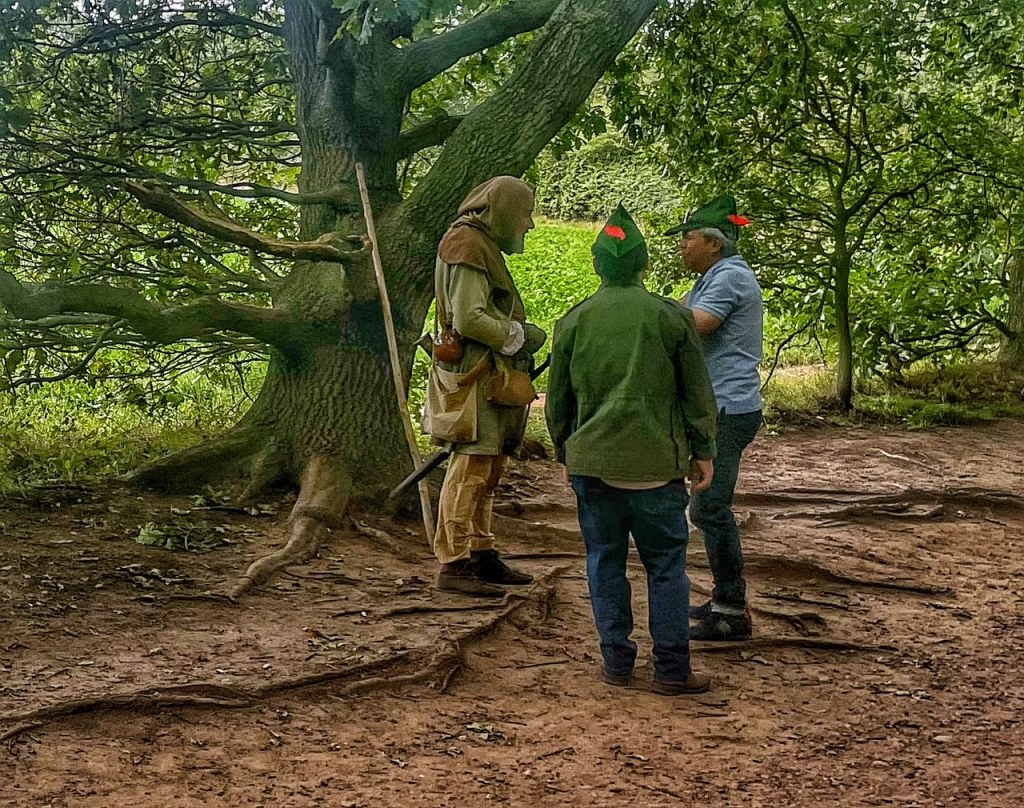
Two Japanese blokes talk to an English boyo about wielding one-sided versus two sided blades. In Sherwood forest. I shit you not.
The magic of Ecclesall Woods
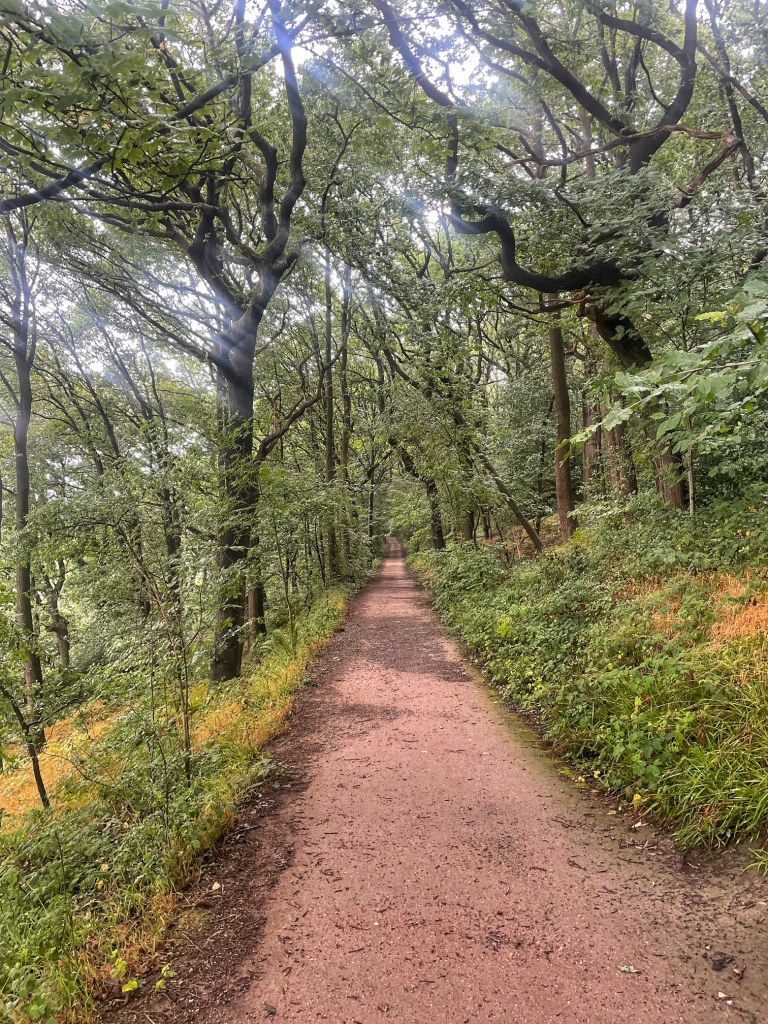
A couple of months ago we did a four week dog sit just outside of Sheffield. Most evenings we’d half-drag the reluctant bulldogs along a mix of trails running through Ecclesall Woods. It was a peaceful part of our days, just the chortling of rivers, the trill of birdsong and the laboured gasps and puffs of our two dog-mates. We have a wide range of fond memories of Sheffield, but I think it was those woods which gave those weeks their real magic.
Around twenty years after William the Conqueror dealt a huge shitty set of blows to the British Isles, he sent agents out into his lands, to make a list of everything he now ‘owned.’ Not long after the resulting Domesday Book was completed, the woods and forests began appearing on maps. Sets of systems were gradually put in place to ensure a continuous and dependable supply of renewable resources, as these woodlands supported the clog-making, barrel-staving, basket-weaving needs of the people. Formalised, sustainable woodland plans.
Within Ecclesall Woods there’s a memorial to a wood collier (charcoal maker), George Yardley, who’d died back in the 18th century. The inscribed stone also lists the people who had paid for the memorial, including a game keeper, a besom maker (a besom is a classic witchy-broom), and the publican from the Rising Sun, an Inn nestled at the entrance to the woods.
The trees we walked the dogs within, had provided the bark used for tanning, the white charcoal needed for lead smelting, and the sticks and twigs required for coven-crafted witch transportation. There’s a stand of coppiced holly which has provided countless cuttings for perhaps a thousand years. The holly was often transplanted to people’s cottages, to keep the witches out…
Although these older practices are no longer prevalent in these woods, the forest is still actively managed. There are good strong paths between the trees, an education centre, and a regular flow of visitors and dog walkers. They were beautiful, a calming and buoying part of our time there. Wouldn’t it be cool though, to find a woodland where I could take part in some of these old skills and crafts? Hmmm, like bow making…

Yorkshire woodlands and tinned fish
Cans of mackerel. Around fifteen years ago I was working for a chainsaw sculptor in the North of England, and lunch was always cans of mackerel, eaten off of a split stick or branch, under a canopy of trees. That was my first experience of working with and within English woodlands: hauling logs, stripping bark and mustard coated fish chunks.
Four weeks ago I lurched into a Tesco, and those lunchtime memories drew me to the tinned food aisle. I also needed loo paper, hot sauce and cloudy cider. These were my last minute purchases before I spent four days sleeping under canvas, using bushcraft skills to make a longbow, and getting to know eight strangers from across the UK.

On our second day of shaping wood and talking bollocks, two women visited our campsite. They were part of a small coppicing team, and they had popped in to let us know that they were lighting up a second charcoal pit, and wind conditions might mean we get smoked up. They also invited us to see what they were doing, yee ha!
Coppicing (I found out) is a traditional method of woodland management, where you can cut specific species trees back to their stump, and this encourages new growth from the stump or roots. To help fund their management efforts, they made charcoal from the trees which they managed.
They led us up through the woods, to a clearing on the hilltop. Here they had one pit running already, iron rings and poles supporting a conical roof which lowered as the wood beneath very slowly burned and smouldered, on its way to becoming charcoal. They had to spend the night with the fires, tending them to ensure they didn’t burn too hot in any one area, or die off in the evening.
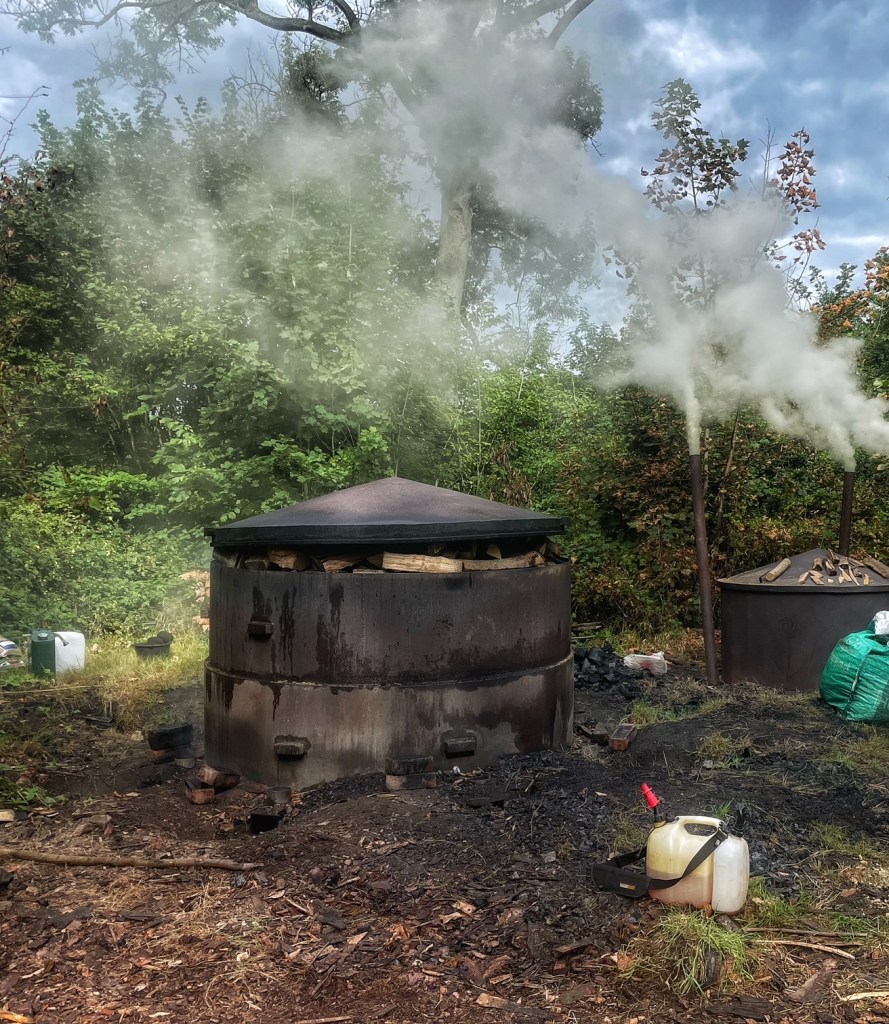
We returned to our canvas shelter, our tree-stump seats, and our draw horses made of branches and cords. We shaped our long staves of witch hazel and ash, looking up as the scent of smoked ash and beech. Later that afternoon I took a long walk past our woods, and was delighted to find two large pigs sheltering and snoring in a rough rustic kennel. I guessed that they too, had their part to play, perhaps truffling?
There was something about seeing people working as part of the environment, in what were clearly very old practices, which sat warmly inside me. These were gradual efforts to draw in those old uses. What if there was a forest where the old ways had never been lost?
The New Forest, Southern England
When William the Conqueror declared the New Forest a royal hunting ground in 1079, he introduced horrific penalties for any action which might affect the venison (the noble animals of the chase, deer and wild boar) or the vert (anything these animals fed on). There were, though, long existing rights for a group of people known as commoners, to engage with these lands in was which benefited both them, and their environment. William decided to allow these to continue, as long as they didn’t interfere with his having somewhere to hunt. though he shaped them for which even allowed some small protections.
These ‘commoners’ are people who have lived in these woodlands since before records began, and they’re still a vital part of the forest today. Their stories, traditions and lore have been passed on through the generations, and their intimate relationship with the forest impacts the woodlands as much today as it did a millennia ago.

My first sense of all of this was from the top of a double-decker bus, in light rain, on a cool Autumn morning. I rode one of three different two hour loops through the woods and villages, listening to a number of mad, marvellous traditions, stories and ideas, all shaped by the environment, and a determination to protect and preserve it, whilst also drawing what was needed to survive. I was enchanted. I spent the next few days walking the woods, looking for ponies, stories and evidence of witch-lore.

On my second day I spent a couple of hours in the visitor centre in Lyndhurst, where a local with runaway eyebrows and a terrier with an eye-patch, told me that pannage had just begun. He explained that pannage was a practice from the medieval ages, where pigs were released into the woods, to feast on acorns and chestnuts, tasty delights which can be poisonous to cattle and New Forest ponies. Once the Court of Verderers decides there’s too many acorns, commoners seek an agister to mark their piggies with distinctive patterns, much like the abundant barbers along Sheffield’s London Road. The pigs are then free to roam for the next 60 days, gorging themselves. Bliss.

While I never found any of the hogs, strung out on acorn and chestnut highs, I did find ongoing set of cultural and forest management practices, and some great legends and fables. I also found New Forest ponies, and you can watch my efforts to find them in the video below.
Walking through woodlands so filled with ancient stories, yet also cared for and used by a people with an intimate relationship to the site, I felt like I was within a story, rather than simply listening to one.
Where to from here?
We are off to Sweden next, which will include some time with relatives of Linda’s, who built a home in a forest yeeeeears ago. I’m hoping that all of this woodland experience will help me build a more powerful curiosity for the bush and forests of home. For the tales they hold, and perhaps for what my part might be in their ongoing story.
Being an active participant in any environment helps me understand it better, and often transforms it into another place I might call home. There’s probably also a lesson in there, in not taking the place we have a home, for granted.


 The Wayfaring Path
Leave a reply to Trudi Cancel reply